
Author: Á. Castillo Arteche
Download article as .pdf: Evolution, Use and Function of the Composite Order: The Case of Colonia Patricia (Córdoba, Spain)
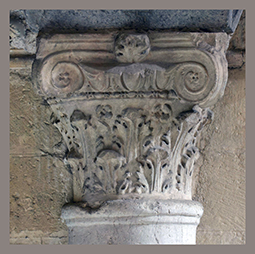 This article examines the evolution, use, and function of the Roman composite order in Colonia Patricia (modern-day Córdoba, Spain). Although the composite capital is scarcely represented across the Iberian Peninsula, Córdoba stands out for the remarkable quantity, morphological variety, and broad chronological span of its preserved architectural elements. Through the compilation and detailed stylistic analysis of 31 marble capitals and fragments, many of them previously unpublished, this study identifies three distinct homogeneous sets and tracks the development of the order from the early 1st c. to the 4th c. AD. The research highlights how the composite order was predominantly used in porticoed squares and public spaces linked to imperial power, most notably proposing its application in the commercial forum near the Bridge Gate during the Flavian period. Ultimately, this comprehensive review redefines the ornamental paradigms of Cordoban architecture, challenging the traditional assumption that the Corinthian order was exclusively dominant. It also mirrors the broader urban trajectory of the provincial capital: a monumental building boom during the 1st c. AD, followed by a reduction in monumental scale and production from the Hadrianic era onward.