
Author: Marco Serino
Download article as .pdf: Alla ricerca di ‘case sacre’ tra Sicilia e Magna Grecia. Per una nuova prospettiva sull’esperienza religiosa nell’Occidente greco, tra ipotesi di lavoro e riflessioni di carattere metodologico
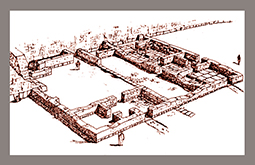 Some religious practices in Magna Graecia and Sicily are strictly related to civic associations and they seem to have very peculiar features. Within these phenomena that belong – like the official polyadic cults – to the complex and varied ‘mosaic’ of religious experiences of the Western Greek colonies, it is possible to include also the so-called ‘sacred house’. These ‘ierai oikiai’ were probably used to host meetings of some small communities belonging to phratriai or other similar local civic associations and family clans. Based on these premises, this paper offers a preliminary survey of all the archaeological contexts within the Western Greek colonies that potentially deserve to be reconsidered from a new hermeneutic perspective. A reappraisal of some buildings through spatial, context and functional analysis allows to appreciate the constant occurance of some common elements within the ‘sacred houses’. Renewed archaeological considerations, together with some socio-anthropological, epigraphic and historical data, contribute to support how it is necessary and urgent to rethink again the concept of “sacred space” in the ancient Greek community, which was often wrongly conceived within the canonized limits of the official sanctuaries. Furthermore, the case-study of the ‘sacred houses’ requires an in-depth rethinking on the category of the household ritual activities, usually limited to religious practices carried out on a personal and private level.