Back to Top

Journal of archaeology and ancient architecture

Tag Archives: Ravenna

Gli impianti termali di Ravenna: infrastrutture idriche e organizzazione urbana in età tardoantica

Author: C. Lamanna

Download article as .pdf: Gli impianti termali di Ravenna: infrastrutture idriche e organizzazione urbana in età tardoantica

This paper explores the hydraulic infrastructure and bathing facilities of Ravenna from the Roman to the Late Antique period, combining archaeological, epigraphic, and literary evidence within a topographical perspective. The study traces the development of the city’s water supply system – from wells and cisterns to the Trajanic aqueduct and its later restorations under Theoderic and the Byzantine exarchs – highlighting its role in shaping Ravenna’s urban and social fabric. Through the examination of at least fifteen bath complexes, both public and private, it reconstructs patterns of spatial distribution and functional organization in relation to the city’s main thoroughfares and monumental areas. The evidence reveals the long continuity and gradual transformation of bathing culture into the early Middle Ages, as ecclesiastical institutions inherited, adapted, and repurposed former public baths for charitable, ritual, and representational aims. The case of Ravenna provides a privileged lens through which to understand the enduring interaction between water management, architecture, and urban life in Late Antiquity.

Bellerophon in Ravenna: Reflections on the Iconography of the Hero in Late Antique Mosaics

Author: I. Baldini

Download article as .pdf: Bellerophon in Ravenna: Reflections on the Iconography of the Hero in Late Antique Mosaics

The article examines the theme of Bellerophon slaying the Chimaera, taking inspiration from the mosaic in the imperial palace of Ravenna. This subject is depicted in the triclinium, along with an inscription encouraging the enjoyment of the fruits of the Seasons, represented as busts of personifications within the same setting. This example can be linked to a long iconographic tradition which, in Late Antiquity, may take on – and sometimes combine – different meanings within a shared expressive system attributable to the aristocratic class.

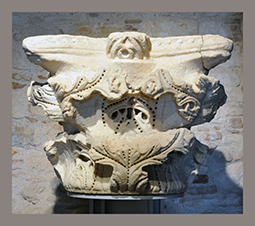
Nuove considerazioni sui capitelli compositi con foglie d’acanto ‘a farfalla’

Author: P. Baronio

Download article as .pdf: Nuove considerazioni sui capitelli compositi con foglie d’acanto ‘a farfalla’


Aim of the paper is to analyze a particular type of acanthus capital with windblown leaves, known as ‘butterfly-winged’, in architectural sculpture of the Early Byzantine period. The goal is to delineate, as far as possible, the dynamics of production and spread of composite capitals with butterfly acanthus. This is a rare type, known mainly from examples in Ravenna and Istanbul datable between the late 5th and the first half of the 6th century. Through the re-examination of the Ravenna material, it has been possible to identify numer-ous unpublished architectural elements obtained by reworking butterfly-acanthus capitals and to consider the important role played by patrons and workshops in their production.