
Autore: E. Daga
Scarica l’articolo in formato .pdf: Multiple Prize Dedications in Orthia’s Sanctuary. Remarks on Dedication Timing and Obligation in Greek Agonistic Practice
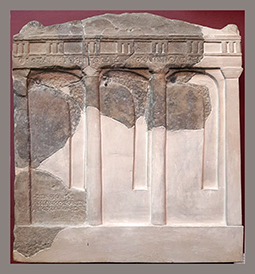 Il contributo analizza le dediche multiple di falcetti nel santuario spartano di Orthia, i premi agonistici dedicati dai giovani vincitori delle competizioni che vi avevano luogo. Leggendo le stele come monumenti nella loro interezza, considerando insieme iscrizioni e falcetti, o gli incassi che li ospitavano, e confrontandole con alcune testimonianze letterarie ed epigrafiche sulle norme che regolavano la dedica dei premi nel mondo greco, il contributo distingue tra la dedica del premio alla divinità e la sua esposizione su un supporto iscritto. Le stele di Orthia mostrano che l’esposizione poteva essere selettiva e cumulativa e, dunque, differita rispetto alle vittorie commemorate. Se nel frattempo i premi restassero nelle mani dei vincitori o fossero già depositati nel santuario non può essere stabilito sulla base della documentazione superstite; il contributo sostiene che la seconda ricostruzione, suffragata dal decreto pergameo, sia la più economica, pur riconoscendo che la prima non può essere esclusa. L’espressione ὄμπρα λαβών in AO 8 è discussa in dettaglio e interpretata come descrizione del premio quale oggetto custodito solo temporaneamente dal vincitore. Secondo questa lettura, la dedica non era un gesto volontario ma una restituzione, soggetta in diverse comunità greche a prescrizioni, termini e sanzioni di carattere locale.
This article examines the multiple sickle dedications in the Spartan sanctuary of Orthia. The sickles were the agonistic prizes dedicated by young victors in the competitions held within the sanctuary. By reading the stelai as complete monuments, inscriptions and sickles or their remaining grooves together, and by comparing them with the literary and epigraphic evidence for the rules governing prize dedication in the Greek world, the article distinguishes between the dedication of a prize to a god, and its display on an inscribed support. The Orthia stelai show that display could be selective and cumulative and therefore deferred with respect to the victories it commemorates. Whether in the meantime the prizes remained in the hands of the victors or were already deposited in the sanctuary cannot be established on the basis of the surviving documentation; the article argues that the second reconstruction, supported by the parchment decree, is the more economical one, while acknowledging that the first cannot be excluded. The expression ὄμπρα λαβών in AO 8 is discussed in detail and interpreted as describing the prize as an object held only temporarily by the victor. On this reading, dedication was not a voluntary gesture but a restitution, subject in several Greek communities to prescriptions, time limits, and sanctions that were locally specific.